
Description
How can I tell the difference between Desi and Chinese walnuts by appearance?
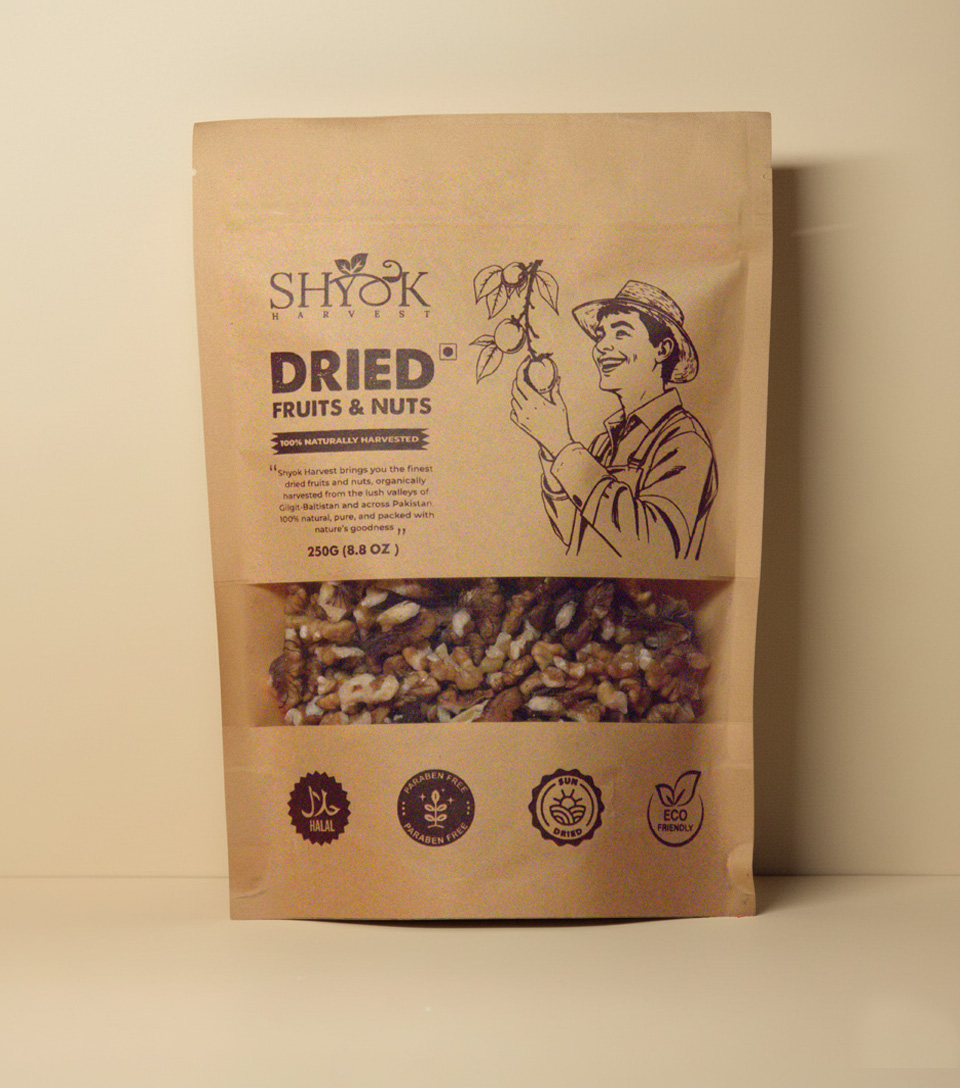
Desi Baltistani walnuts usually have irregular, darker, and rougher shells, often with natural marks or lines. Their kernels are compact, golden to light brown, and vary in shape and size due to hand-cracking.
On the other hand, Chinese walnuts often come in very clean, smooth, and light-colored shells, looking almost too perfect — this is because they are machine-washed, polished, or bleached. The kernels are often larger but pale and unnaturally uniform.
Do Desi and Chinese walnuts taste different?
Yes! Desi walnuts have a rich, earthy, and slightly bitter taste, which is a sign of purity and freshness. They feel more “alive” on the tongue.
Chinese walnuts tend to be bland or slightly sweet, but lack the natural depth and richness — and sometimes may carry a chemical or stale aftertaste due to long storage or processing.
Are Desi Baltistani Walnuts healthier than Chinese walnuts?
Yes! Desi walnuts are 100% natural, sun-dried, and free from chemicals or artificial processing. Chinese walnuts are often treated with bleach or preservatives to enhance appearance, which can reduce their natural health benefits.
Why do Desi walnuts taste different from Chinese ones?
Desi walnuts have a bold, earthy flavor with a natural bitterness that reflects their purity. Chinese walnuts may taste milder or even bland because they are often processed and stored for long periods.
Is there a difference in freshness?
Absolutely. Baltistani walnuts are harvested and packed locally in small batches, ensuring freshness. Chinese walnuts are usually imported in bulk and stored for months, which can affect quality.
Which one is better for natural and organic eating?
Desi Baltistani Walnuts are the better choice for anyone seeking an organic, chemical-free, and naturally nutritious product. They support local farmers and deliver unmatched purity straight from the mountains
Reviews
There are no reviews yet.